

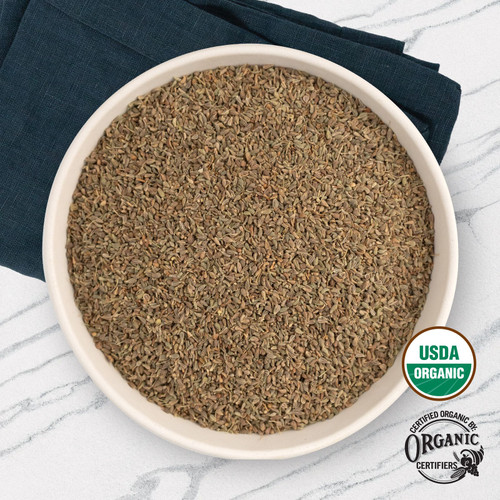
- Organic Anise Seeds (Pimpinella anisum) sourced from the lush green farms of the Faiyum Oasis in Egypt, the center Egyptian agricultural for thousands of years.
- Certified Organic by Organic Certifiers, Inc. Packaged in the USA.
- Anise Seeds are a highly aromatic spice, the licorice flavor is both sweet and mildly spicy. A true culinary gem.
- Anise Seed, a key ingredient in many Mediterranean dishes, can be ground into powder, or used whole, for baking bread, sweet deserts and savory gourmet meals.
- The J Mac Botanicals Love Promise - We are a family-owned company, proud of our organic premium quality products. We promise complete satisfaction.
Organic Anise Seed, whole

Organic Anise Seed, whole
Price:
$9.99 - $34.99
Organic Anise Seeds Q&A
Learn more about our organic anise seeds, including how to use them for herbal tea, baking, cooking, flavor profile, recipe ideas, and storage tips.
Organic anise seeds are commonly used for herbal tea, baking, cooking, and spice blends. They have a naturally sweet, licorice-like flavor that works well in both sweet and savory recipes.
To make anise seed tea, lightly crush 1–2 teaspoons of seeds and steep in 8 oz of boiling water for 5–10 minutes. Strain before drinking, and adjust the amount or steep time to suit your taste.
Anise seeds have a sweet, aromatic flavor often compared to licorice. Their distinctive taste makes them popular in teas, cookies, breads, and traditional culinary recipes.
Yes, these are certified organic whole anise seeds sourced from Egypt, a region known for producing aromatic, high-quality spices.
These are whole anise seeds. Whole seeds help preserve freshness and aroma and can be used whole or lightly crushed depending on the recipe.
Anise seeds can be added whole or lightly crushed to baked goods such as cookies, breads, biscotti, and cakes. They pair well with citrus, cinnamon, cloves, and other warming spices.
Anise seeds are commonly used in herbal teas, baked goods, breads, cookies, spice blends, and select savory dishes. They are especially popular in traditional and Mediterranean-inspired recipes.
Yes, anise seeds are often used in cooking and homemade spice blends. Their sweet, aromatic flavor can add depth to both sweet and savory recipes.
Crushing is optional. Lightly crushing the seeds can help release more flavor, especially for tea or recipes where a stronger anise taste is desired.
Yes, anise seeds can be used whole or crushed depending on the recipe. Whole seeds are often used in baking and slow-cooked dishes.
Yes, anise seeds are commonly used in herbal tea blends and pair well with ingredients such as fennel, chamomile, peppermint, and other caffeine-free herbs.
No. Although they share a similar flavor profile, anise seeds and fennel seeds come from different plants and differ in appearance and taste.
Yes, whole anise seeds can be ground using a spice grinder or mortar and pestle for recipes that call for ground anise.
Store in a cool, dry place away from direct sunlight in a sealed container to help maintain freshness, flavor, and aroma.
Yes, anise seeds are naturally caffeine-free, making them a popular ingredient for herbal teas and caffeine-free beverage blends.
Yes, these organic anise seeds are intended for culinary and tea use.
Yes, in addition to tea and culinary uses, anise seeds are sometimes used in homemade spice blends, potpourri, and other DIY projects.
Related Products